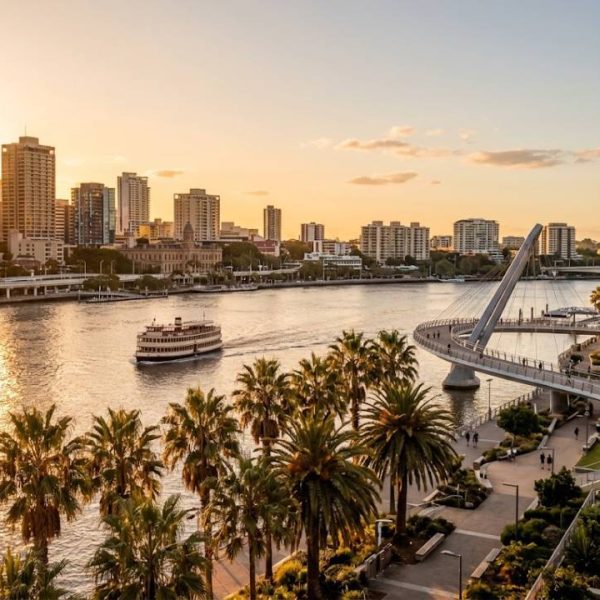
Brisbane is a relaxed, sunny city that curves around a wide river. It combines a walkable center, green parks, lively neighborhoods and easy access to beaches and rainforest. Visitors often use it as a stop on the way to the coast, yet it deserves a few days of its own. This guide covers the main attractions, food and nightlife, plus practical tips for planning your visit.
Getting to know the city
The Brisbane River shapes everything. Bridges, ferries and riverside paths link the central business district with leafy suburbs, and the climate is subtropical, with warm winters and hot, humid summers.
The compact center makes it easy to explore on foot, and public transport covers the rest.
The simplest way to see Brisbane is to follow the river, on foot, by bike or on a ferry.
South Bank and the river
South Bank is a favorite starting point. The parklands include a beach-style lagoon, gardens, cafes, markets and cultural institutions such as the museum, library and art galleries. Evening walks along the river offer views of the city lights and the arched bridges.
The Story Bridge, a steel landmark, can be admired from the riverside or climbed with a guided tour for panoramic views.
Wildlife and nature
Koala sanctuaries near the city let visitors meet native animals and learn about conservation. Mount Coot-tha, a short drive from the center, has a lookout, botanic gardens and walking trails.
Day trips lead to national parks, sand islands and beaches. Always follow local guidance on wildlife, sun protection and swimming areas.
Culture and history
Galleries and museums present First Nations art, contemporary exhibitions and local history. Festivals fill the calendar, from music and film to food events, so check what is on during your stay.
The official Queensland tourism website lists events, regional maps and practical visitor information.
Eating and drinking
Brisbane has a strong cafe culture, with specialty coffee and brunch served in almost every neighborhood. Fresh seafood, local produce and international cuisines from Vietnamese to Greek are easy to find.
Farmers markets are held on weekends, and craft breweries and rooftop bars take advantage of the warm evenings.
Nightlife
Fortitude Valley is known for live music, clubs and late-night eateries, while West End has a bohemian atmosphere with bookshops, cafes and small venues. Riverside bars and cinemas offer calmer options.
Travel safely at night by using licensed taxis, ride-hailing apps or late-running public transport, and keep an eye on your drink and belongings.
Getting around
Buses, trains and city ferries share a single smart card system. The fast CityCat ferries are both useful and scenic. Bicycle hire and electric scooters are common, though local rules on helmets and where to ride apply.
Best time to visit
Autumn and spring, from roughly March to May and September to November, bring mild days and low humidity. Summer is hot with afternoon storms, while winter is dry and sunny, ideal for sightseeing.
Tours and communication
Many visitors join guided tours, and international guests value clear explanations in their own language. Tourism operators that work with interpreting services at events and conferences make visitors feel welcome and reduce misunderstandings.
Audio guides and podcasts are another good option, and this article on audio transcription and voice-over explains how they are produced for different languages.
Budget tips
Many top attractions are free, including parks, the lagoon and river walks. Look for combination passes, travel off peak and eat at markets to keep costs down.
Staying safe and comfortable in the sun
Queensland sunshine is strong even on cloudy days, so carry a hat, sunscreen and a refillable water bottle. Plan outdoor walks for early morning or late afternoon, and save museums and shopping for the hottest hours.
The simplest rule is to treat midday as indoor time. You will enjoy the river far more at golden hour anyway.
Markets and local shopping
Weekend markets along the river and in the inner suburbs are a relaxed way to meet locals. Expect fresh produce, handmade gifts, coffee roasters and plenty of street food. Bring a tote bag and some small change, because many stalls prefer quick payments.
If you want a quieter option, wander the boutique streets just outside the centre, where independent cafes and bookshops open late on Thursdays and Fridays.
Getting around without a car
Brisbane is easy to navigate on public transport. CityCats and ferries glide along the river, buses cover the inner suburbs and trains reach the airport. A reloadable travel card saves money and time on every trip.
Walking and cycling paths follow both banks, so even short hops between sights can become part of the experience.
Sample three-day plan
Spend day one around South Bank and the city center, day two at a koala sanctuary and Mount Coot-tha, and day three on a river cruise or a day trip to the coast. Leave evenings flexible for dinner and live music.
With warm weather and friendly locals, Brisbane rewards visitors who slow down and explore on foot.